Sunday, August 12, 2012
The Genius of Ayn Rand ...
... was her ability to persuade the rentier class that they are productive and necessary, and that they are entitled to rule.

Saturday, August 11, 2012
The Sixties

A yoga class in Aspen, Colorado, 1969

Wagner Park in Aspen Colorado, 1969
It is said that if you remember the Sixties, then you
weren’t really there. I should
point out that I wasn’t really there.
I was a kid living in suburban Texas during the whole period of The
Sixties. As far as I was
concerned, The Sixties was something that happened on tee vee that made no
discernable impact upon the environment I lived in. My first tangible contacts with The Sixties came as they
were ending and after they were over.
Our annual summer family road trip in 1969 took us to Aspen, Colorado,
to the ski lodge my grandparents still owned at the time. We arrived in an Aspen crowded with
hippies. Their VW vans parked
everywhere, and there were always 10 frisbees in the air at any one time in the
parks. I remember the wool ponchos,
the jeans, the long hair, and the bare feet black with dirt. My parents were
appalled. Eleven year old me was
horrified … and a little intrigued.
I had older cousins who joined the hippies in Aspen. Later in life, I had a good friend who
was a serious hippy in those days, long before I knew him. In his teens and early twenties, he
regularly hitchhiked from his home in St. Louis to San Francisco to join
friends in the Haight. I had
friends later in life that went through the Vietnam War at about the same
time. One of them joined the Navy
hoping to avoid combat. He ended
up on river patrol in the Mekong Delta and told some horrific stories. Another one I knew whose major passion
in life was German literature, found himself snapped up by the draft after he
earned his master’s, and right in the middle of the Tet Offensive. He never talked about his wartime
experiences and never recovered from them. He never achieved that academic career and the scholar’s
life he long wanted, though he never lost his passion for German literature.
By the time I came of age, and discovered The Sixties, the
counter-culture, the anti-war movement, etc. were all coming to an end, and the
long reaction against them was beginning.
Those my age who shared my interests were very few and thoroughly
marginalized. Most of the rest of
Texas suburban kids I knew shared the conviction of their parents, that the
turmoil and violence of the Sixties vindicated the Conventional Order. Like French conservatives during the
Bourbon Restoration of 1814 – 1830, they fully expected a return to the status
quo ante as if nothing had happened. Their expectation of restoration turned
out to be as frustrated as my expectation of revolution.

Jefferson Airplane poster; I confess a certain fondness for these old psychedelic posters. Art Nouveau and Symbolist designs redone in Dayglo colors
The Sixties was a revolution. It was not the political revolution many expected. As a political revolution it was a
total failure. The people who own
and run the United States now are the same people who have always owned and run
it. No real power changed
hands. The Sixties was a profound
social and cultural revolution that dramatically altered people’s expectations
out of life down to the present day and far into the future. During the 1960s, the Victorian era and
its cultural legacy finally ended in the USA. That culture ended in Europe much earlier with the First
World War.
Alexis de Tocqueville said that expectation is the spark of
revolution. Indeed, it was
expectation that drove the turmoil of The Sixties. Expectations that were sown in the experience of World War
II came to fruition in the 1960s after having lain dormant (though far from
dead) in the 1950s. As in the
First World War, African Americans served in the Second World War with
distinction and expected an end to segregation as their just and overdue
compensation. After World War I,
they returned to violent white resistance and repression in the wave of
lynchings and racist violence of the 1920s. They returned from World War II determined to prevail in the
struggle this time around. When
Rosa Parks refused to give up her seat on the bus, everything was ready for the
long struggle that followed. Women
entered a workforce with acute manpower shortages created by the war. They did what was long considered
“man’s work,” and they did so quite successfully for high wages, sometimes higher
than what their husbands earned.
Many began to feel that baby-raising and housekeeping were not
necessarily destiny after all.
Gays and lesbians who long felt isolated and were invisible to each
other as much as to society, found each other and discovered their numbers in
the wartime mobilization. Some gay
veterans described visiting Paris’ once famous gay nightspots as a
transformative experience. The gay
clubs and cabarets of Paris reopened immediately after Liberation and were
packed with soldiers dancing with each other, a first glimpse of substantial
numbers of men and women who shared their same feelings and the first
suggestion of potential political power.
Most veterans after the war wanted to return to some kind of
structure and stability after the experiences of combat and dislocation, and
welcomed the “normalcy” of the late 1940s and 1950s. Other veterans had a taste of a larger world and of
possibilities in life beyond the conventional expectations of a still very
insular United States. They
congregated in port cities like New York and San Francisco and created the
first bohemias in the USA since the 1920s. The Beats created that yearning for freedom, adventure, and
authenticity that would be central to the later Counter-Culture.
Expectation may be the spark of revolution, but there is
nothing more combustible than frustrated expectation (as the rulers of the Arab
world are now finding out). That
same frustrated expectation drove the racial violence of the 1960s, and the
later turmoil of the antiwar movement.

Captain Beefheart poster
The now much vilified sexual revolution of the 1960s was
perhaps the most far-reaching and profound transformation of the era. The taboos that surrounded sex in the
Victorian era dropped. People
pulled back the curtain, hiked up their dresses, pulled down their pants, and
took a good look. No fault divorce
became law in state after state, and with it came a dramatic increase in
divorce rates and a corresponding sharp drop in rates of domestic
violence. Pre-marital sex was
always more common than people assumed, and now it was no longer secret. The Pill transformed sex and what
people expected from it. The Pill
made it possible for the first time in history for women to control their
cycles of fertility, and to have the final and decisive say in the decision to
have children. Biology was no
longer destiny. This opened up
worlds of new opportunities for women, and forever changed traditional gender
roles. I suspect that this might
have happened in some form even without The Pill. Since World War II, women pushed ever further outward beyond
the roles traditionally assigned to them, even in the face of resistance. Feminism remains under-rated as a major
force in Post World War II history, nationally and internationally. I strongly suspect that reaction
against feminism, and fear of the expectations it creates, drive religious
fundamentalist movements around the world. It was the combination of the inspiration of the Civil
Rights Movement and the sexual revolution that dramatically transformed the
tiny marginalized movement for homosexual rights into a global popular movement
for gay rights in the Stonewall riots of 1969. Family life will never be the same again. The old Victorian domestic ideal of the
Master of the Castle and the Angel of the Home with silent obedient cherubic
children is gone forever. The
family today is more egalitarian and democratic with spouses thinking of
themselves as partners sharing the responsibilities of raising children and
maintaining the household. That
spouses are two different genders or the same gender hardly matters
anymore. The stability once
provided by the clear Victorian hierarchy of pater familias on top of a descending order based on age and gender
that safeguards its members against life’s uncertainties was replaced by the
home as a less clearly structured and more vulnerable loving community facing
the contingencies of life together however imperfectly.

The high culture of the 1960s may have been cool (from
formalist criticism to Pop Art), but its popular culture was hotly
Romantic. Thousands upon thousands
of young men who never heard of Goethe lived out The Sorrows of Young
Werther in The Sixties. The old Beat idea of life as a
never-ending adventure, once confined to a small marginal population, now
became the expectation of millions of people. Those old conventional satisfactions of a comfortable home
and happy family were not enough anymore.
People woke up to a modern world full of social and legal constraints
that no longer seemed legitimate.
This desire to be absolutely free was anarchic and had a corresponding
longing for the authentic in a commercial world where language and imagery were
entirely manipulative. Ironically,
the always adaptable culture of commercialism found ways to transform these
very deep desires for liberation and authenticity into sales pitches. The anarchism of the Counter-Culture
could also take some very dark turns when people threw off all restraints as Charles
Manson reminds us. This popular
culture is still very much with us, though much transformed. Now everyone is in some measure a
heroic outsider. The grungy jeans
from the Army Navy surplus store with a tee shirt tie-dyed in a tub of Ritt Dye
look that began as a rejection of consumer culture now comes tailored and costs
a fortune in a high end boutique.
We usually associate The Sixties and its counter-cultures
with the Left, but it transformed the expectations of the Right as well. The Romantic hero defying corrupted
convention shades easily into Ayn Rand libertarianism and even into far right
supremacism. Ted Nugent’s far
right machismo is as far removed from the old 1950s domestic ideal as any group
of Vegans in an Occupy encampment.

I know a lot of you out there lived through The Sixties and saw a lot more of it than I did. What do you remember and what do you think of it now?
Friday, August 10, 2012
Sympathy

The Golden Temple at Amritsar, India
Sympathy and solidarity with the Sikhs of Oak Creek, Wisconsin in their time of loss and grief.
"Aae-i-aa marann dhuraahu houmai roee-ai ||
From the very beginning death is ordained, but egotism causes one to bewail.
Gurmukh naam dhi-aa-e asthir hoee-ai ||1||
By remembering the Name, through the Guru, one becomes eternal. ||1||
Gur poorae saabaas chalan jaan-i-aa||
Blessed is the Perfect Guru, through whom the way of Death is known.
Laahaa naam su saar sabad samaan-i-aa||1|| rehaao ||
The sublime persons earn the profit of the Lord’s Name and in the divine word are absorbed. ||1||Pause||
Poorab likh-ae ddaeh se aa-ae maa-i-aa||
The days of one's life are pre-ordained, they do come to their end, O mother.
Chalan aj ke kaleh dhurahu furamaa-i-aa||2||
One must depart, today or tomorrow, according to the Lord's Primal Order. ||2||
Birthaa janam tinaa jinhee naam visaar-i-aa||
In vain are the lives of those who have forgotten the Lord’s Name.
Jooai khaelan jag ke ehu man haar-i-aa||3||
Playing the game of chance, in this world they lose their soul. ||3||
Jeevan maran sukh hoe jinhaa gur paa-i-aa||
In life and in death peace resides with those who attain their Guru.
Naanak sachae sach sach samaa-i-aa||4||12||64||
O Nanak, the true ones are truly absorbed into the True Lord."
Tuesday, August 7, 2012
Robert Hughes

Robert Hughes died yesterday at the age of 74. He was a writer, and for many years a widely read and controversial art critic for Time magazine, among other publications. He was originally from Sydney, Australia where he once had ambitions to be an artist.
I know a lot of artists who really didn't like Hughes. Others artists I knew loved him. Some thought his views were remarkably bigoted, and he did indeed have a habit of making sweeping pronouncements that he sometimes had to walk back, and also sometimes regretted. He could be strikingly insensitive when it came to women and gay men. And yet, as much as he complained about "political correctness," he insisted that the United States was nothing if not multicultural, and that it was always such, to the great irritation of very conservative critics like Hilton Kramer. Other artists I knew thought his views were remarkably refreshing, and relished his regular skewering of more conventional art criticism.
Like Hilton Kramer, Hughes is considered a conservative art critic, though no one could be more caustic in his criticism of the intersection of the Free Market with Fine Art than him. Hughes' politics, unlike Kramer's, were not right wing. He had no illusions about Morning Again in Reagan era America. If anything, the Reagan years were for him the nadir of the American art industry, when the distortions wrought by easy money, hype, investment mania, greed, and ambition were at their most grotesque. Hughes kept his distance from the right wing intellectuals over at The New Criterion and The National Review. Hilton Kramer was one of them. Hughes was not.
I began reading Hughes' reviews in Time magazine even before my art student days. He was something most writers about art are not, really fun to read. He insisted on putting modern and contemporary art into larger contexts of history and meaning, something that is usually the domain of more Marxist critics. Hughes began writing during the later days of the domination of formalist criticism that insisted on reductivism; everything "extraneous" to pure form was to be ruthlessly purged. Hughes built his career by challenging those conventional assumptions. His writing suggested to very young artists like me (and others) a bigger world filled with possibilities beyond the narrow constraints of ideological formalism.
His book The Shock of the New suggested to artists like me a very different way of thinking about modern art, as less about the search for pure and meaningful form, and more about a complex engagement with modern history that was far more interesting and satisfying, and -- unlike the work of more learned art historians of the time -- accessible.
What made Hughes conservative in the best sense was his insistence that art stick to certain basic criteria that were tried and true throughout history. Art should keep criteria that were refined by experience, not ideology. Hughes believed first and foremost that the proof of the pudding is in the eating, not the recipe. A bad work of art was a bad work of art no matter what kind of critical or historical justification could be concocted for it. He rejected the aesthetics of failure (as did, surprisingly, that arch-minimalist painter Agnes Martin).
His hero was the great Spaniard Francisco de Goya, the living embodiment of what Hughes believed was best in art: an authentic vision made powerful and compelling through formal excellence, and an engagement with history, not as ideology, but as witness. Looking at Goya's best work, it is hard to argue with success.
The Shock of the New began as a series on modern art on the BBC in the 1970s.
What I'm Working On
These are some photographs that I took yesterday with my trusty little digital camera of a painting project I've been working on for some time now. I'm remaking a series of paintings that I finished more than ten years ago about the artist and writer David Wojnarowicz. I've posted about that earlier series before.
In this version, I'm making him a little less of a martyr and more of an artist and adventurer.
Some of these paintings are finished and others are not yet.

I never met the man, but here I am painting him.


David Wojnarowicz was a regular at the West Side piers, a now destroyed ruin that was for decades a gay cruising area. He painted many works of the walls that were all destroyed when the piers were torn down. He painted at least one large painting of pterodactyl there.


I can never get the colors to come out right whenever I photograph this painting. I'll have to wait for my professional photographer Steven Bates to get these colors right.
This painting is based on this text by Wojnarowicz:


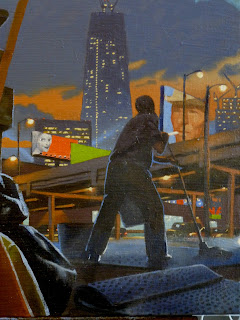

This painting is not finished and will undergo a lot of changes.
David Wojnarowicz traveled frequently in the west, usually by hitchhiking or hopping freight trains. In later years, he drove a motorcycle out to the western desert which he loved. He said that the desert reminded him of the background landscapes in George Herriman's comic strip Krazy Kat from 1913 to 1944. Wojnarowicz was a big fan of Krazy Kat, and quoted that cartoon strip frequently in his paintings.



In this version, I'm making him a little less of a martyr and more of an artist and adventurer.
Some of these paintings are finished and others are not yet.

Painting David.
I never met the man, but here I am painting him.


The Green Pterodactyl.
David Wojnarowicz was a regular at the West Side piers, a now destroyed ruin that was for decades a gay cruising area. He painted many works of the walls that were all destroyed when the piers were torn down. He painted at least one large painting of pterodactyl there.

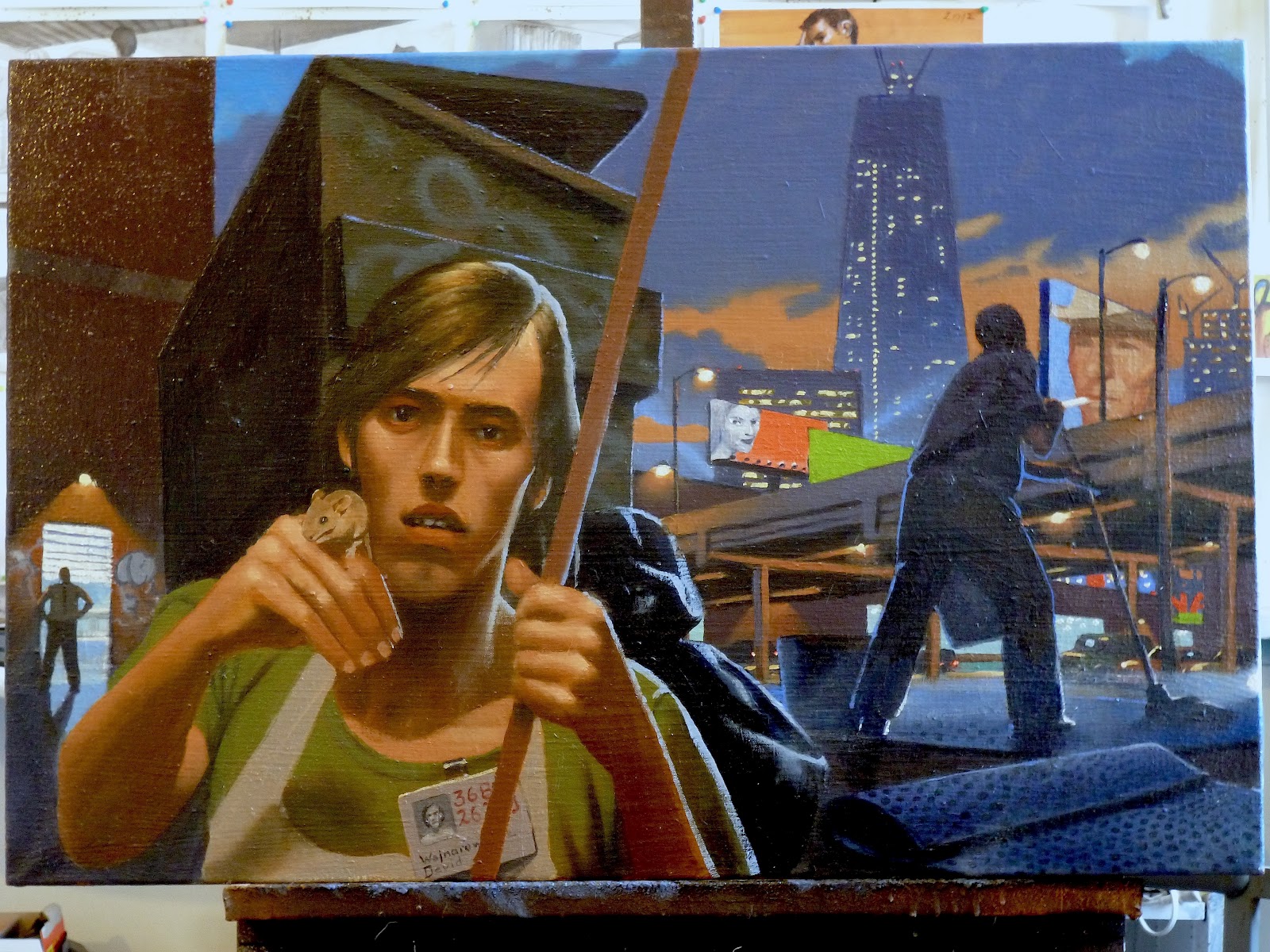
What Is This Little Guy's Job in the World?
I can never get the colors to come out right whenever I photograph this painting. I'll have to wait for my professional photographer Steven Bates to get these colors right.
This painting is based on this text by Wojnarowicz:
What is this little guy's job in the world. If this little guy dies does the world know? Does the world feel this? Does something get displaced? If this little guy dies does the world get a little lighter? Does the planet rotate a little faster? If this little guy dies, without his body to shift the currents of air, does the air flow perceptibly faster? What shifts if this little guy dies? Do people speak language a little bit differently? If this little guy dies does some little kid somewhere wake up with a bad dream? Does an almost imperceptible link in the chain snap? Will civilization stumble?


Krazy Kat Landscape
This painting is not finished and will undergo a lot of changes.
David Wojnarowicz traveled frequently in the west, usually by hitchhiking or hopping freight trains. In later years, he drove a motorcycle out to the western desert which he loved. He said that the desert reminded him of the background landscapes in George Herriman's comic strip Krazy Kat from 1913 to 1944. Wojnarowicz was a big fan of Krazy Kat, and quoted that cartoon strip frequently in his paintings.

David Acts Up
This painting is also unfinished and still has to go through several changes.
David was active in ACT UP, and took part in many ACT UP actions, including stopping traffic as in this painting.
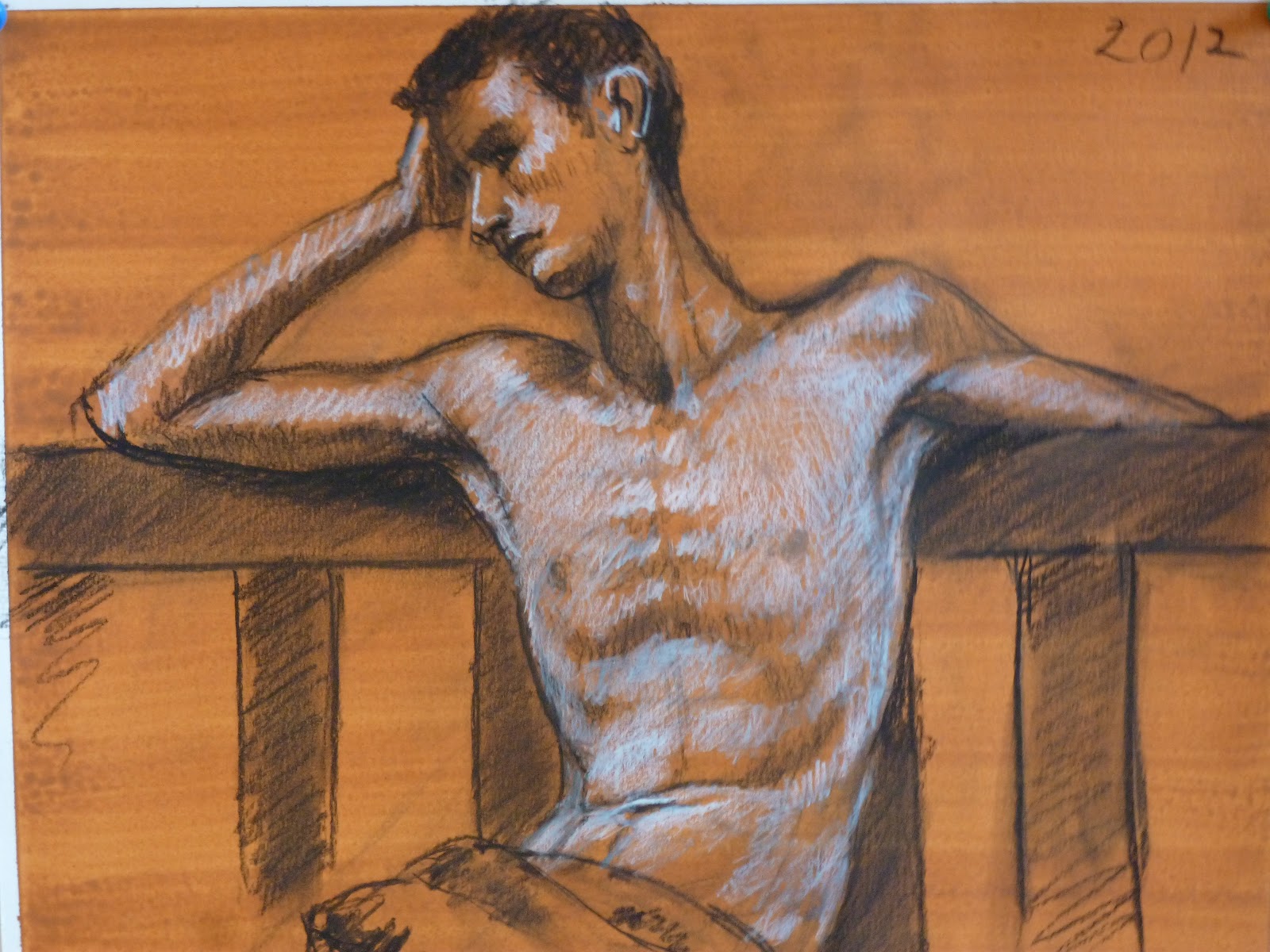
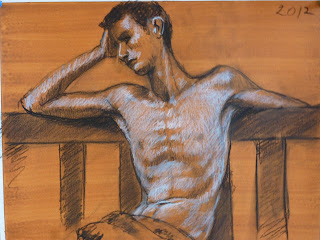
Here is a life study for a future painting in the series.

Here is the same model, the same pose, in pencil.

My messy studio
Sunday, August 5, 2012
Marilyn
Marilyn Monroe died today in 1962. It's hard to believe she's been gone for 50 years.
I still miss her.
Marilyn Monroe was famously difficult for directors to work with. Billy Wilder swore he would never work with her again after making Some Like It Hot. "I'm too old and too rich" he said. And yet, that movie would be unthinkable without her. She really makes it. She was a great comic actress, a fine singer, and an unforgettable presence where ever she appeared, on the screen, in public, or in the pages of celebrity gossip mags and Playboy. Celebrities now like to project cool, from Lady Gaga (who can also be wickedly funny) to Uma Thurman (who is wickedly beautiful). Marilyn projected warmth, especially in her movies. Maybe that's why we miss her so much.
Artists loved Marilyn.


Andy Warhol painted his first painting of Marilyn shortly after her death. He always used the same publicity photo copied and silkscreened hundreds of times in hundreds of variations.


I still miss her.
Marilyn Monroe was famously difficult for directors to work with. Billy Wilder swore he would never work with her again after making Some Like It Hot. "I'm too old and too rich" he said. And yet, that movie would be unthinkable without her. She really makes it. She was a great comic actress, a fine singer, and an unforgettable presence where ever she appeared, on the screen, in public, or in the pages of celebrity gossip mags and Playboy. Celebrities now like to project cool, from Lady Gaga (who can also be wickedly funny) to Uma Thurman (who is wickedly beautiful). Marilyn projected warmth, especially in her movies. Maybe that's why we miss her so much.
Artists loved Marilyn.
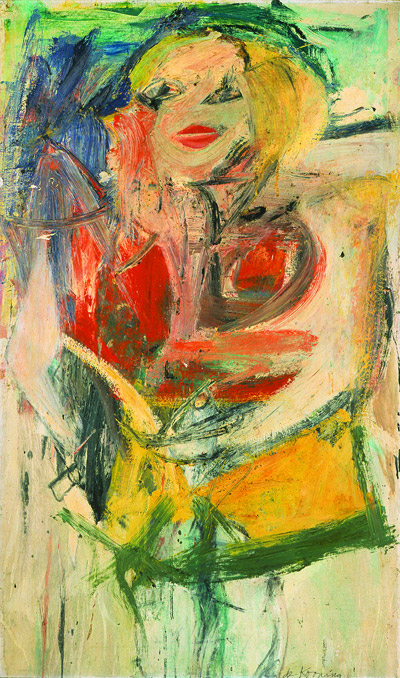
Marilyn by Willem deKooning

Marilyn by James Rosenquist
Andy Warhol painted his first painting of Marilyn shortly after her death. He always used the same publicity photo copied and silkscreened hundreds of times in hundreds of variations.


It's Hot As Blue Blazes
Today was like a sauna here in New York. I know most of the rest of you out there are going through a lot worse than us this summer.
So, here's some spectacular cool wet thoughts from Esther Williams in 1946. So pour yourself a tall iced tea with plenty of shaved ice and enjoy.
So, here's some spectacular cool wet thoughts from Esther Williams in 1946. So pour yourself a tall iced tea with plenty of shaved ice and enjoy.
Subscribe to:
Posts (Atom)