De Kooning's Excavation in the Chicago Art Institute

Willem de Kooning in his studio in 1950

Willem de Kooning, Excavation, 1950
I stood in line with legions of tourists on Monday to get into the Museum of Modern Art to see the de Kooning show for a second and last time. I heard German in one ear and French in the other, Russian in front of me and Japanese behind me. The place was packed with tourists, art students on vacation, and artists (of course, I was one of those). The tourists mostly filled the permanent collection galleries crowding around modern warhorses like Van Gogh’s Starry Night, Picasso’s Demoiselles d’Avignon, and
Dali’s Persistence of Memory, photographing and being photographed with those very famous paintings.
The de Kooning show on the top floor was indeed crowded. I was a little surprised because he’s not quite my idea of a crowd pleaser. The show was crowded, but not packed. I had no trouble seeing and spending time with the art. For a longtime de Kooning fan like myself, the show was a feast. Almost all of the Women paintings were there from all three series. It was quite an experience to see them all hanging together. I doubt there will be another opportunity in my life to go back and forth among the originals hanging next to each other. His great abstract works from the 1940s and 50s were almost all there including the great Excavation from Chicago, and a lot of wonderful work that was new to me. There was a very generous selection of his under-rated (in my opinion) later painting from the 1970s and 80s. There was also a collection of his over-rated (in my opinion) sculpture.
The de Kooning show here in the Museum of Modern Art in New York brings back a lot of memories for me, especially from my earliest days in art school. Those memories came flooding back when I contemplated deKooning’s great Excavation. I remember twice traveling in a small carpool from Kansas City to Chicago with Ron Slowinski’s painting class from the Kansas City Art Institute to see the Art Institute of Chicago. Excavation was always a highlight of the trip. Professor Slowinski loved this painting, and so did we. I still love this painting 30 years later. As far as I’m concerned, it’s one of the finest paintings ever produced in the United States, and still one of the best of the 20th century. It’s a painting created out of all the issues and conflicts of modern painting, and yet, it remains a very difficult and mysterious picture. It’s hard to pin down exactly what it is and what it’s about. Even the title is a mystery.
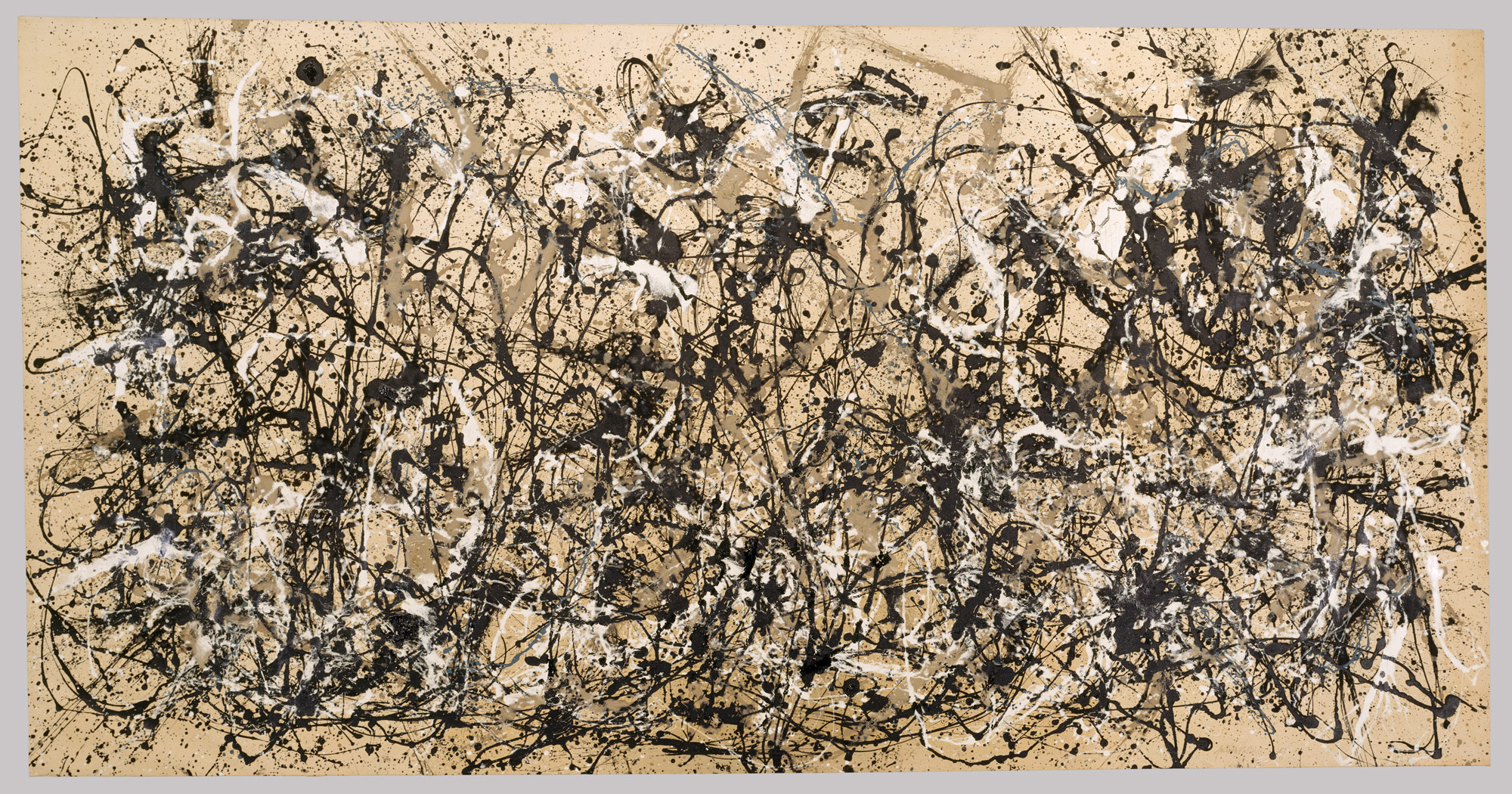
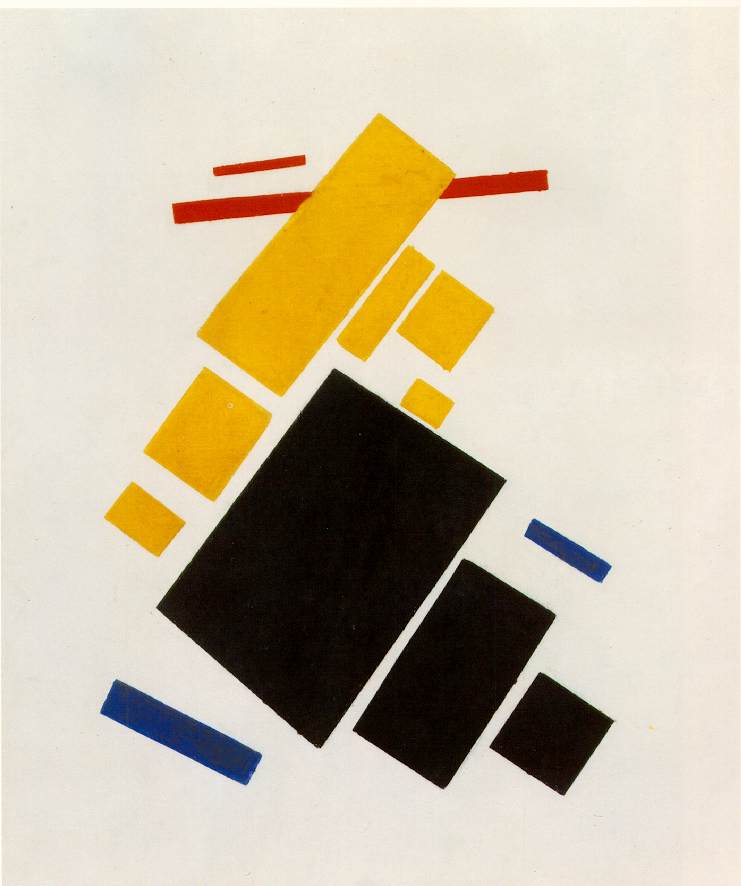
Excavation is a great picture and de Kooning’s largest easel painting, the culmination of about 6 years work in a new kind of painterly abstraction that he first learned from his close friend, the artist Arshile Gorky. It is a large all-over centerless composition perhaps intended to be a reply to Jackson Pollock’s centerless drip paintings which he began making in 1947. For all of Pollock’s paint spattering, de Kooning’s painting comes off as much more aggressive and complex in its structure. As in Pollock’s painting, no one part is more important than any other, but there is a clear sense of structure, of a kind of architecture holding up that seething field of shifting passages that shoot here and there like lightning. Big thick meaty strokes of a warm cream-colored paint seem to be laid on top of a more colorful painting underneath. Thin calligraphic black lines made with a sign painter’s lining brush in very thin enamel paint tie those thick strokes of creamy paint back into forms that are very suggestive of everything from body parts to buildings without ever describing anything definitively. De Kooning apparently went back into the painting here and there with touches of very bright greens, yellows, reds, blues, and lavenders. But, much of the color seems to be coming from earlier phases of the painting beneath (perhaps that’s why it’s called Excavation). Pollock’s drips can be flat as a pan or as deep as outer space depending on how you look at them. De Kooning gives us a kind of crumpled and more ambiguous space that is neither the clarity of linear perspective, nor the entirely flat picture plane of pure abstraction in a work by Malevich or Mondrian. It is closer to the ambiguous space created by Picasso and George Braque in their Analytical Cubist paintings from 40 years before Excavation. As in that earlier Cubist work, the distinction between figure and ground, mass and volume, near and far, foreground and background, is completely collapsed. Instead of the Cubist grid, there is a much more jagged structure in deKooning’s painting created by the interactions of colors and brushstrokes. This is a violent electrically charged painting with no recognizably violent imagery.
De Kooning spent much of 1950 working on Excavation in a dark cramped studio on 4th Avenue across the street from Grace Church. The painting went through many phases, beginning as a group of figures in an interior with a door and a skylight. A vestige of the door survives in the bottom center of the painting. We can see an early phase of the painting in some color photographs taken as de Kooning worked on the picture. It is dramatically different from the painting we see now.
 De Kooning photographed in his studio on 4th Avenue in 1950 with Excavation in an early state.
 The critic Harold Rosenberg, who coined the term "action painting" and was an early champion of de Kooning's work, with de Kooning in the 4th Avenue studio in front of the unfinished Excavation. The toothed grin that appears in the finished painting appears here right above Rosenberg's left arm.
The picture that we see today came about not through any process of elimination as in Mondrian’s paintings, but through addition. De Kooning kept putting more and more stuff into the painting. There’s a lot of speculation about the origins of the painting and about what it was supposed to be about. The big areas of cream-colored paint suggest body parts. Indeed, there is the suggestion of eyes here and there, backs, shoulders, legs, breasts, and buttocks all scattered about. There is even a toothy grin with a large eye in the left center of the painting. Some critics link this painting to images from World War II, to news photographs of mass graves in the death camps. Many note the compositional similarities between this painting and Picasso’s Charnel House that was based on death camp imagery. I’m a little skeptical of this idea, 1950 seems late for this kind of subject matter. While de Kooning certainly cared about what happened to his native Rotterdam, he had no direct experience of the War. He was in the USA and not eligible for military service (he was an illegal alien). Also, the emotional tone of the painting is very cool. This is not a mournful or horrified painting. De Kooning’s painting remains very colorful while Picasso paints his Charnel House in a very mournful black and white monochrome. Perhaps the best explanation for the painting is from de Kooning himself, “I paint the way I do because I can keep on putting more and more things in – like drama, pain, anger, love, a figure, a horse, my ideas of space. It doesn't matter if it differs from mine, as long as it comes from the painting, which has its own integrity and intensity.” I was very gratified to see this quote on the wall text next to this painting in the MoMA show.
I’m not sure de Kooning’s creation of Excavation, or of most of his paintings, was quite as deliberate as some critics seem to presume. I doubt that he began with any kind of theme or narrative in mind. A theme or subject would materialize as he worked on the painting. De Kooning was an improviser. He would begin with a shape or a color and improvise visual riffs off of that. He would then do riffs off his previous riffs. Sometimes, he began his paintings with an image, and they would end up abstract, as Excavation did. Other times, a shape would become an image or a series of recognizable images.
De Kooning loved jazz all of his life (he frequented legendary jazz joints like George’s in the Village and The Savoy Ballroom in Harlem as early as 1929), and if his work is like anything, it is like jazz. As Charley Parker or Miles Davis use a tune as a kind of platform from which to launch spontaneous invention, so De Kooning uses the old Cubist grid, Cubist space, Surrealist automatism, or even straightforward imagery as structures upon which to improvise. Jazz musicians riff off the structure of a song and off of each other. De Kooning, the solitary artist, would continue to invent out of his previous inventions, and sometimes dramatically edit a painting by blocking out whole sections with opaque paint, or restore structure to a chaotic area with his liner’s brush dripping with black enamel paint. We see all of that in abundance in Excavation. The “drama, pain, anger, love” that he talked about found its way into his work through the inventions of his brush. The sense of tragedy in jazz comes out in the way a tune is played, not in the tune itself. Billy Holiday probably could sing “You Are My Sunshine” in a way that could break hearts. Similarly, de Kooning invested his paintings with triumph or disaster, not in their subject matter, but in the way that they are painted. The “messiness” or painterliness of his work is a big part of its appeal. It always just skirts the edges of chaos like a daring figure skater on thin ice. The forces that play across his paintings are barely held in check by a perfectly calibrated sense of structure.

A detail of Excavation, the toothed grin.
Excavation was de Kooning's first major critical success. This painting transformed him from being an underground figure with a cult following to an artist with an established reputation as a leader of American modernism. The Director of the Museum of Modern Art, Alfred Barr Jr., chose Excavation and 3 more works by de Kooning for the American pavilion at the 1950 Venice Biennale. Excavation was included in MoMA's Abstract Painting and Sculpture in America show in 1951. The painting swept all the top prizes at the Chicago Art Institute's annual exhibition of contemporary American art in 1952. The Art Institute bought the painting for its permanent collection despite conflict within the acquisitions committee over the decision (there was similar resistance from the Metropolitan Museum's Board of Trustees over the decision to purchase Jackson Pollock's Autumn Rhythm). Excavation has resided in Chicago ever since.
Willem de Kooning lived to be 92 years old, as old as Picasso with a career about as long. He lived long enough to see himself celebrated as one of the greatest artists in the USA. And yet, he was always at heart a 22 year old poor Dutch kid who just jumped ship, and was always dazzled by size, the energy, and the opulence of the USA. Like almost all the other Abstract Expressionists, he began life poor in a broken home. He was born in Rotterdam. His parents divorced when he was 5. Though the Dutch courts awarded his father custody, his mother abducted him and kept him for 7 years. His mother was a large domineering and abusive woman who owned and ran a low dive bar near the Rotterdam dockyards. She was the bartender and the bouncer in a bar that catered to sailors and other rough customers.
Since his boyhood, de Kooning was a striver who worked hard and played hard.

Willem de Kooning, Still Life, c.1921
This is a charcoal drawing from de Kooning's days in art school in Rotterdam, the only known surviving drawing from those years. He worked during the day and studied nights at the Academy of Fine Arts and Applied Sciences in Rotterdam. This drawing is probably from his 4th year there. It's a first rate piece of student work that shows a very precise and confident drawing hand. He also studied carpentry at this same school.
He worked for a department store in Rotterdam doing commercial illustration and building window and floor displays.
In 1926, de Kooning boarded the SS Shelley as a stowaway in the engine room. He jumped ship at Newport News, Virginia. He worked his way as an engine-stoker on another ship to Boston and jumped ship there. He eventually made his way to New York without speaking any English, with no money, and no papers. He would become one of America's most famous illegal immigrants.

Willem de Kooning in 1926 in Hoboken on the steps of the
Stevens Institute of Technology
When he arrived in New York he worked doing odd jobs, carpentry, house painting, construction, illustration and display for department stores, and commercial murals, "fake Bouchers and Fragonards" for wealthy private homes according to a co-worker from the time. I did the same thing almost 80 years later. I painted my share of fake Bouchers and Fragonards. Some things never change. Legend says that de Kooning painted murals for speakeasies during Prohibition.
De Kooning was ambitious as a fine artist, and specifically as a modern one. He sought out other artists in New York, went to museums and galleries, and began painting on his own in his spare time.
Stevens Institute of Technology
When he arrived in New York he worked doing odd jobs, carpentry, house painting, construction, illustration and display for department stores, and commercial murals, "fake Bouchers and Fragonards" for wealthy private homes according to a co-worker from the time. I did the same thing almost 80 years later. I painted my share of fake Bouchers and Fragonards. Some things never change. Legend says that de Kooning painted murals for speakeasies during Prohibition.
De Kooning was ambitious as a fine artist, and specifically as a modern one. He sought out other artists in New York, went to museums and galleries, and began painting on his own in his spare time.

Willem de Kooning with his mother, Cornelia Nobel,
on Coney Island in Brooklyn, 1935
on Coney Island in Brooklyn, 1935
 De Kooning, study for a WPA mural project for a housing project in the Williamsburg section of Brooklyn, 1936
De Kooning quit his job to work for the WPA, an unusual thing to do during the Great Depression. Most people at that time were glad to have any employment. The WPA gave De Kooning an opportunity to work full time as an artist for the first time. He loved the regular company of other artists and felt accepted as a part of the United States for the first time. He met a number of other European artists in exile employed by the program. He worked as an assistant to the great French Cubist painter Fernand Leger when he was in the USA painting murals for the WPA. De Kooning met his closest and most influential friend of the time, the Armenian immigrant Arshile Gorky in the WPA. Leger and Gorky encouraged de Kooning to experiment with modern and abstract form, even in public commissions. De Kooning lost his WPA job because of his dubious immigration status.
 De Kooning, untitled, 1948 - 9
This painting was an unknown treasure for me in the MoMA show. It's part of a series of abstractions done in black and white from this time and painted with cheap enamel house paints mixed with oil paints. The story is that de Kooning was too poor to buy regular oil paints at this time. That may be true, but he turned that shortage into an opportunity.
 De Kooning, Painting, 1948
De Kooning used black and white monochrome in the same way that Picasso and Braque used monochrome in their Analytical Cubist paintings from about 1910 to 1914. De Kooning also used surrealist automatism and chance at the suggestion of his friend Arshile Gorky letting his mind come up shapes begin look like things but never quite describe anything. Paint is allowed run and drip suggesting more things by chance. On the right are square forms suggesting a table edge locating this in an interior. Across the picture, shapes suggest all kinds of things without really describing anything definite. Space in this painting conflates foreground and background, mass and volume in a manner similar to Cubism.

De Kooning, Attic, 1949
What worked with black also works with white, what one critic called a "photo negative" of the black paintings.
 De Kooning, Zot, 1949
“Zot “is Dutch for “fool” and the word appears in lower left corner of this small painting. Cubist painters put words into their paintings where they always seem to float surface above the collapsed space of the painting. De Kooning made letters and words part of the structure his paintings as he does here. De Kooning may also be experimenting with all-over composition perhaps influenced by Jackson Pollock.

De Kooning, Asheville, 1948
De Kooning painted this while teaching one summer at Black Mountain College near Asheville, North Carolina. The exiled Bauhaus professor Josef Albers invited de Kooning to teach there for a summer session in 1948. This was the first of de Kooning's abstractions to incorporate color.
 De Kooning, Ganesvoort Street, 1949
Named for a street in the former meat packing district on the West Side, this beautiful small painting is another revelation of the MoMA show.

De Kooning in his studio on West 22nd street in 1937
While the critic Clement Greenberg described de Kooning as "an outright abstract painter," little did he know that de Kooning painted figuratively and continued to paint figuratively at the same time that he painted abstractly.

De Kooning, Elaine Fried (Elaine de Kooning), pencil drawing, c1940 – 1941
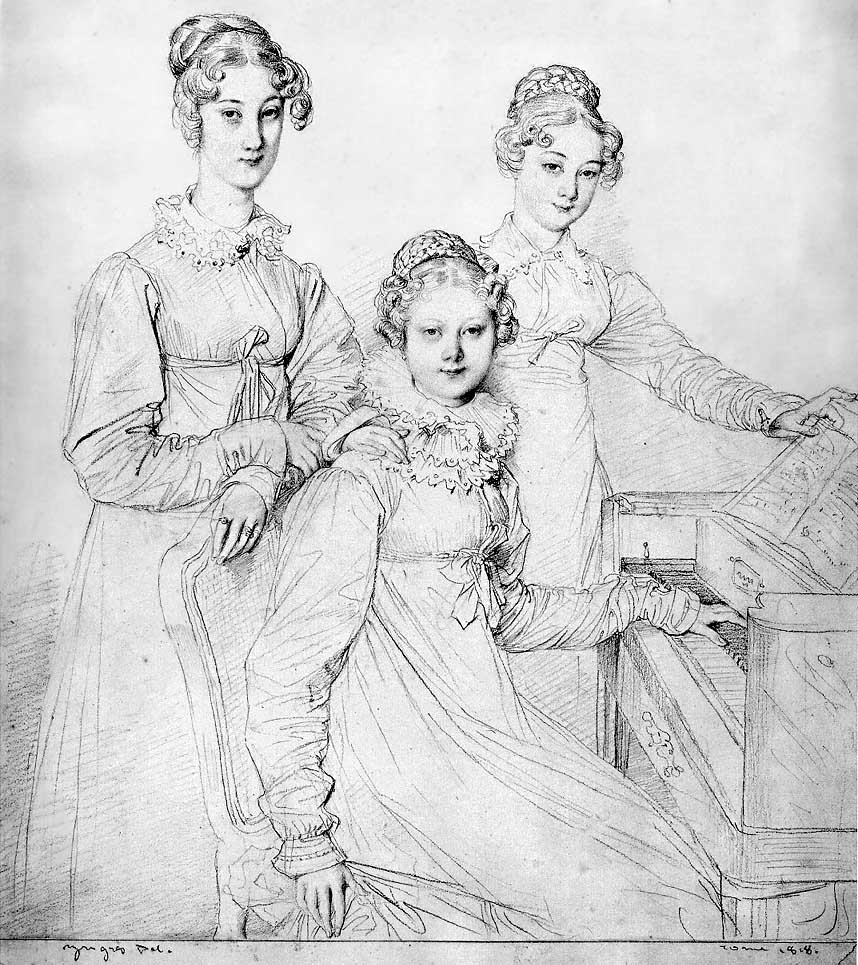
A surprising and beautiful drawing of the only woman de Kooning would marry, probably made shortly after they first met. De Kooning was, with many other artists, a great admirer of the very precise and superbly efficient portrait drawings of Ingres. He does his own version of an Ingres pencil drawing here.
De Kooning was a notorious womanizer starting at an early age. He carried on with models, a trapeze artist, dancers, cashiers; whoever was available and interested (since the young de Kooning had striking good looks, there were a lot of interested women). He once carried on a ménage a trois with 2 mistresses. He was certainly not faithful to Elaine. Theirs was a stormy marriage with numerous separations and reconciliations, but they never divorced. Though long separated, they were still officially married when she died in 1989. Elaine was a very successful artist in her own right, so there was almost certainly an element of rivalry between them.

De Kooning, Seated Woman, c. 1940
An elegant painting for which Elaine probably posed. It combines memories of Picasso’s portraits of Marie Therese Walter and Dora Maar from the 1920s and 30s with the precise elegance and finality of Ingres. The very open brushwork and color is entirely de Kooning’s own. The colors are definitely not the tonal palette of Classical art, nor is this the modern chromatic palette. These are the lush brilliant colors of American commercialism. These are the kinds of colors you would see in ad spreads in big glossy picture magazines of the day like Life or The Saturday Evening Post.
This painting begins the first of 3 series of paintings of women that de Kooning painted together with his abstract work. Who is the “woman” in de Kooning’s “Woman” paintings? She’s not anyone in particular. She’s not the Venus of European art from Praxiteles to Matisse. She’s certainly not the Virgin Mary. She’s the siren of American advertising, the luscious sales rep ready to please, eager to make the sale, inhabiting the ripe paradise of the huge supermarket and the stuffed refrigerator. This was the emerging American Eden of the post War boom years. Perhaps outsiders like de Kooning best appreciated this aspect of life in the USA. Other artists of the day avoided the vulgarity of American commercialism like the plague. For de Kooning, the landscape of American advertising was his imaginary playground.
De Kooning felt the flip side of the American commercial paradise, the paranoia and xenophobia. De Kooning had a lifelong terror of police and any kind of public official. This remained true even in his old age when he received medals and citations from Presidents of the United States. He was an illegal alien and lived in constant fear of deportation when he was young.

De Kooning, The Queen of Hearts. c. 1943 - 1946
Another elegant lady from de Kooning’s first series of “Woman” paintings

De Kooning, The Queen of Hearts, detail
The beautifully drawn and slightly ludicrous face of the Queen, perhaps reflecting the influence of his friend, the now almost forgotten painter John Graham

De Kooning, Pink Angels, c. 1945
A breakthrough painting, arms and other parts always threatened to come off and start on their own in de Kooning’s first Woman paintings. Here, they finally come apart into suggestive shapes. De Kooning goes back into the painting while it is still wet with a stick of charcoal, anticipating the calligraphic line of black paint drawn with a sign painter’s line brush in paintings like Asheville and Excavation.

De Kooning, Woman, 1949
Painted at the same time as the black and white abstractions, this second “Woman” series is very different in look and feeling from the first. The old elegance and withdrawn mood of that first series is gone, replaced with distorted shrieking monsters. The siren of American advertising gets run through the blender of 1920’s Picasso. Here and there, she is filleted into something boneless. At the same time she grows menacing teeth and eyes. The paint application is a lot more aggressive. Instead of fields of bright color scumbled carefully over pencil drawing, big fat strokes of black paint wrestle all these shrieking colors and slashing strokes of the brush into the form of a nude red headed woman seated in a chair.

De Kooning, Woman, 1949 – 1950
The smiling luscious sales rep becomes a monster. That toothed smile that in advertising is supposed to radiate friendliness and sociability here threatens to eat us. Her right hand becomes an immense grasping claw. The breasts are anything but lusciously inviting. They are reduced here to 2 sharp loops of black paint as alluring as razors.

De Kooning, Woman, detail
This head with that distorted mouth is amazing. Where do these monsters come from? Perhaps these are every Casanova’s nightmare of castration and venereal disease. That was certainly true of Picasso’s monster women. Perhaps these are manifestations of the menace that lurks behind the inviting sales patter. Maybe these are the force that manifests itself when the mark fails to fall for the pitch.

De Kooning, Woman I, 1950 – 1952
Critics largely ignored de Kooning’s figurative works until this painting. This is de Kooning’s most famous painting. Excavation established his reputation as a major modern artist. Woman I made him famous and notorious. Now the critics paid attention and they were deeply divided. The painting infuriated Clement Greenberg, offending his idea of the reconciliation of form and content through reductivism, a reductivism that permitted no figurative form.
The shrieking monsters of the Second Woman series now become a single immense creature that dominates the whole painting. Whoever she is, she is immense and powerful, turning and facing us squarely. She is seated and looks straight at us with huge staring eyes. She smiles, or is that a grimace she flashes at us? She has huge shoulders, immense breasts, and grasping claw-like hands. She is the Bride of Frankenstein, Queen of the Amazons, an ancient fertility goddess, a ludicrous freak of nature, all in one. She owes nothing in form or spirit to Picasso. She is an entirely original creation. She is menacing, grotesque, awe inspiring, and ridiculous. Some critics speculate that she might be in part the ghost of de Kooning’s large domineering bartender/ bouncer mother, Cornelia Nobel.
Whoever she is, de Kooning paints her with his most aggressive and violent technique yet. The deftly controlled chaos of Excavation is gone. De Kooning attacks this canvas with great slashing strokes that spatter the paint and cause it to run here and there. And yet, the color is surprisingly delicate, much more so than in the previous Woman series. Red, orange, yellow, green, pink, and aqua blue peek out from a matrix of pearly gray.

De Kooning, Woman I, detail
Here is a close-up of that smile/ grimace and those big staring eyes. De Kooning worked very hard to get that snarling smile just right. He wiped it out and started it over several times. The huge eyes make me think of the wide staring eyes on ancient Sumerian votive figurines from Tel Asmar. Some of those figurines are on display at the Metropolitan Museum, and may have been familiar to de Kooning.
That de Kooning could make the toothy smile of American advertizing into such a menacing snarl is a real stroke of imagination.

Photograph by Rudolph Burckhardt of an early stage of Woman I.
Woman I went through several stages before becoming the painting we know today. It is almost unrecognizable in this early phase. De Kooning tacked and pasted big cut out pieces of tracing paper on his paintings, some of which you can see here if you look closely. This is a technique he learned from commercial painting to try out various solutions before committing to one.

Photograph by Rudolph Burckhardt of a later stage of Woman I
The painting we know today is starting to take shape. The smile in this painting is cut out of a magazine with another practice smile underneath it. For a long time, he could not get the smile to work, so he just cut one out of a magazine ad and glued it on while he worked on the rest of the painting.

Ad for Camel cigarettes featuring the “T- zone.”
The ads from which he harvested mouths were ads like these for Camels. De Kooning was fascinated with the “T-zone,” how it seems to emphasize and separate out the woman’s smile at the same time.

De Kooning, Study for Woman I with a cutout of a
mouth from a Camel “T-zone” ad, 1950
mouth from a Camel “T-zone” ad, 1950
Much to the dismay of his champion, the critic Harold Rosenberg, de Kooning frequently made preliminary studies for his paintings. Rosenberg considered this deliberation and experimentation to be an offense to the purity of impulse in action painting. De Kooning considered this very traditional way of working a useful step in realizing a final painting. The very idea of a final painting is an offense against modern aesthetic where the process of realization counts for more than the final product.
In this study, we can see a mouth cut out from a Camel ad used here.

De Kooning, Woman VI, 1956
De Kooning did several large paintings in this third and last Woman series. They are all grand and magnificent, as is this one. And yet none of them have the menace of the first one.

De Kooning, Easter Monday, 1955 – 1956
The iron discipline of the black line disappears from de Kooning’s abstract work from this time. Color now finds its own structure.

De Kooning, Easter Monday, detail
De Kooning borrowed the titles for a lot of paintings from this period from cheap crime novels. He also transferred newspaper images into the wet oil paint as can be seen here in this detail. This was something that happened at first by accident. He would use cut-out sections of newspaper upon which to try out things on the canvas and discovered that the paint picked up the news print. He decided to leave these backwards and ghostly transfers in his work anticipating the silkscreen images in Robert Rauschenberg’s work.
De Kooning was always the odd man out in Abstract Expressionism. He couldn’t have cared less about Jungian psychology with its ideas about a collective unconscious manifesting itself as myth and symbol that drove artists like Pollock and Rothko. If anything, de Kooning was closer in spirit to Pop Art. However, de Kooning’s attitude toward popular culture was more passionate engagement than the ironic emotional distancing of Johns or Warhol.

De Kooning, Suburb in Havanna, 1958
In the late 1950s, de Kooning was rich and famous. He left New York and built a large new studio on land he bought in eastern Long Island, in Springs (where Pollock once had his studio). He began large paintings with enormous sweeping brushstrokes like this one. Unlike his previous work that found its origins in urban experience, these begin to engage landscape.

De Kooning, Woman, Sag Harbor, 1964
Springs softened de Kooning, or at least softened his form sense. His Woman now becomes openly seductive and sexually available. We feel safe now to yield to the alluring sales rep without fear of her morphing into the devouring repo man. While New York and the rest of the art world was starting to go through the rapid succession of multiple “-isms” making competing claims on The Future, de Kooning began a long engagement with the time honored subject of figures in a landscape. De Kooning was fascinated by the shimmering light and color of water and vegetation in his new home out in Springs (back when it was still rural and before that area turned into a WASP Establishment playground for the international plutocracy, The Hamptons).

De Kooning, … Whose Name Was Writ in Water, 1974
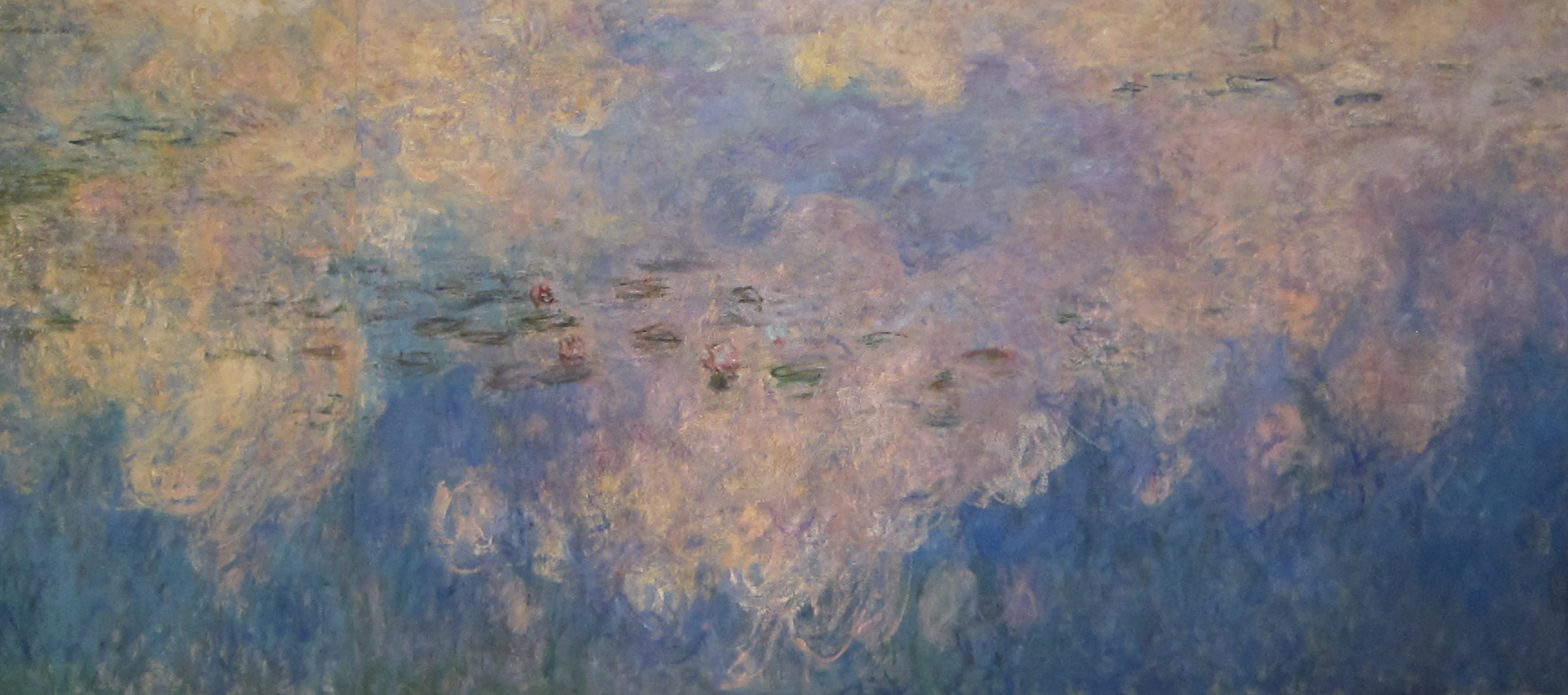
I think that this painting ultimately has nothing to do with Keats or with his epitaph or with mortality. I think it is more about the literal sense of the phrase, about writing on water. It is about that shimmering flickering brush stroke, like waves and currents of water that took over de Kooning’s work in the 1960s and 70s. It is a lot like the flickering brushstroke in the late work of Claude Monet, only without that direct tie to literal visual experience. To my mind, this is the most uneven period of de Kooning’s work. Sometimes these paintings are marvelous, other times they are barely coherent.

De Kooning, Figures in a Landscape, drawing, 1974
De Kooning remained a first rate draftsman all of his life. Sometimes that flickering stroke that shapes his visions of figures in landscape works better in graphic form.

De Kooning, Untitled II, 1983
Toward the end of his life, the old structural discipline begins to return to his work. The flickering brushstrokes begin to disappear. The calligraphic line begins to return. Also, his old practice of painting out large sections of his work returns with a vengeance. In his old age, it would be huge strokes of Titanium white painted over more colorful older painting while it was still wet. De Kooning was in his late 70s and 80s when he did these paintings and suffering from ill health and the first stages of Alzheimer’s disease. There appears a compulsion at the end of his life to pare down his work to the structural essences that guided him all of his life. While the critics are still divided over their assessment of these paintings, I think that they are magnificent, better than anything being done at the time by 2 or 3 generations of younger artists.

De Kooning, Rider (Untitled VII), 1985
At the end of his life, that paring down to structural essences becomes more radical than ever. In reproduction, these paintings always look like thinned out paint over blank canvas. They are not at all. This is paint laid on thick with vast areas blocked out by large thick sheets of titanium white. There is a lot of controversy over how much of these final paintings is de Kooning’s work and how much is the work of his assistants. How much of this work is the creation of his imagination, and how much is it shaped by his growing decrepitude and Alzheimer’s. I think whether the assistants painted most of these or not, de Kooning was clearly in charge and they were taking orders (Matisse did the same thing at the end of his life when he was too frail to work directly, supervising assistants). As for the Alzheimer’s, this would not be the first time in his life that de Kooning worked without full possession of his conscious faculties. In his younger days, he was as bad an alcoholic as Pollock. Whereas long benders kept Pollock from working, de Kooning worked right through them with no discernible sacrifice of quality.
De Kooning stopped painting entirely after 1987 and closed his studio. He was not told of Elaine’s death in 1989. He finally died in 1997 at the age of 92 and after a career of more than 70 years.

De Kooning in his studio in Springs, Long Island, 1981
For Willem de Kooning, a lifelong jazz fan, whose own work was full of riffs, here are Charlie Parker and Miles Davis together.