Friday, February 1, 2013

The Columbia 10 Years Ago Today


Something I wrote today 10 years ago:


The Space Shuttle Columbia was destroyed today.  It broke apart upon reentry over Dallas.  All 7 of the crew certainly perished, though so far, no remains have been recovered.  It happened as I awoke this morning.  I was listening to my usual Saturday shows on the radio as the news came over the wires.  I called my mother and brother who heard nothing unusual that morning.  Other news reports out of Dallas reported a series of loud sonic booms.  It seems these catastrophes always happen in the morning as I am just getting up.  I remember when the Challenger exploded in the morning.  The first plane crashed into the WTC September 11th, 2001 as I stepped out of the shower.

I have no mind for mathematics.  I am not mechanically inclined.  Whatever appreciation for science I have is largely aesthetic.  I like traveling less and less as I get older.  I’m getting more phobic (heights, sharp things, fire, etc.) and more timid with each passing year.  My views and politics are probably far to the left of most mechanically inclined prosaic can-do types.  And yet, I have always been an enthusiastic supporter and admirer of space exploration.  That has not changed with today’s catastrophe.  My most vivid and happiest historical childhood memories from the 60s were not of the Counter-Culture (I was far too young and too remote from all that) and certainly were not of the Vietnam War; they were of the Space Program.  I followed all those space flights with relish from John Glenn in Friendship 7 to the last Apollo flight to the moon in 1972.  I even followed all of the now forgotten missions of the Gemini program.  That is the only aspect of the 60s that I feel privileged to have lived through and witnessed.  All of those mighty projects to put men on the moon were ultimately peaceful despite their Cold War motivations.  They brought people together in a great civilizing enterprise of exploration.  They were great works about something other than war or commerce (even though they began in war and benefited commerce).

Exploration was always risky since the first ancient Polynesian or Viking or Phoenician or Chinese or Greek or Arab set sail in uncharted waters.  The bones of lost and luckless explorers litter the frontiers in history.  Space is vast, disorienting, hostile, and implacably alien.  Exploring even our small part of it is lethally dangerous.  People died and will die again trying to push back that frontier; several Russian cosmonauts, the crews of Apollo 1, the Challenger, and now the Columbia.  I am so grateful for people with the courage and spirit to risk their lives to take a small light up into that immense darkness.  I salute all those who try to expand the realm of the possible for all of us puny little mortals; even when they die trying.

May the seven astronauts who died today rest in peace.


Grave of Robert Falcon Scott in the Antarctic


Ed Koch


Ed Koch, New York City's mayor for 3 terms,  died last night at age 88.

I arrived in New York about 2 years after Ed Koch left office as mayor of New York, so I have no direct experience of his tenure as mayor.  He was mayor when I first visited the city in 1982.

New York City politicians are a little like Texas politicians.  Writers of obituaries always describe both as "larger than life" like the places they govern.  Koch was deeply conflicted, just like the place he governed, and left a very conflicted legacy to the city.

Koch is credited with putting New York back on the road to recovery after the long slide into neglect, anarchy, and bankruptcy of the 1970s.  Perhaps, but he did so frequently at the expense of poor and middle class minorities.  Like just about every mayor since Peter Stuyvesant, Koch was too cozy with the real estate and financial industries.  As did so many other cities in the USA, New York developed itself for the benefit of the transient rich frequently at the expense of the established poor.  Like mayors in other cities, he sometimes pitted ethnic whites against minority populations for political advantage.  In this he was probably no worse and no better than most big city mayors in the USA at the time.

How much blame or credit can any mayor deserve for the decline and resurgence of New York?  Mayor Lindsay still gets blamed for the city's decline.  But it could be argued that the 1970's slide was the end result of decades of white flight from city centers and government policies that abetted that flight.  The city's bankruptcy came after decades of mismanagement and questionable book-keeping.  Should Mayor Koch get credit for the city's resurgence?  Yes and no.  He reformed the city's financial management.  He worked to bring big profit big spending businesses into the city (especially banks and the financial industry).  But banks and real estate flourished while the city's light industries and port declined.  By the late 1970s, the migration out of city centers was starting to reverse in New York and many other cities.

Ed Koch was allegedly gay and deep in the closet.  Maybe so, maybe not.  His record on gay rights is mixed.  When he was elected to Congress in 1969, Koch became one of the very first politicians to actively seek out and court gay voters in the wake of the Stonewall riots.  In that he was very different from the very liberal (and very squeamish) Mayor Lindsay who hoped the whole gay thing would just go away.  During his third and last term as mayor, Koch signed into law a city ordinance banning discrimination against gays and lesbians in housing and employment.  Gay activists such as Marty Robinson, Morty Manford, and Jim Owles first proposed such an ordinance to City Council members in 1970.  A bill was first introduced in 1971.  The bill sat in committee until 1974.  When it finally came to the floor of the City Council, surrogates for the Catholic Archdiocese made sure that the bill failed and died.  For years afterward, the Council's majority leader made sure that the bill never left committee every time it was re-introduced.  In 1986, Mayor Koch put his support behind the bill and got it out of committee and finally passed.  It was during his third term as mayor.  His administration was deeply mired in corruption and patronage scandals at the time.  In his previous 2 terms, the Mayor showed no interest in advancing the bill or in gay rights at all.  At this point in his career, Koch had little political capital to spend and little to lose, so this effort late in his tenure cost him little.  He was late passing this bill, but better late than never.  It might not now be law without Koch's support.

Koch's record on AIDS is less commendable, knuckling under to pressure from the Catholic Archdiocese to squash the city health department's efforts to educate and promote safe sex to the public.  At the time, AIDS sufferers were about as popular as mildew and Koch was not eager to spend any political capital on their behalf.  He shared the Reagan and Bush administrations' policies of malign neglect when it came to AIDS.  AIDS activists at the time (most notably Larry Kramer) accused Koch of throwing AIDS patients under the bus to save his own closet.  However Koch's AIDS policies were little different from the conventional wisdom of the time (which is no excuse).

I once read an article on Koch by a journalist given to purple prose (and whose name I can't remember) who described him as "an abrasive pavement pounder allergic to trees."

Thanks Mr. Mayor for what you did right, and never mind about the rest.

In memory of the late mayor:


Wednesday, January 23, 2013

National Pie Day


...seriously, it really is National Pie Day today according to the American Pie Council.  Today is not to be confused with National Pi Day on March 14th.

We'll see just how long the copyright lawyers let this stay up on YouTube:


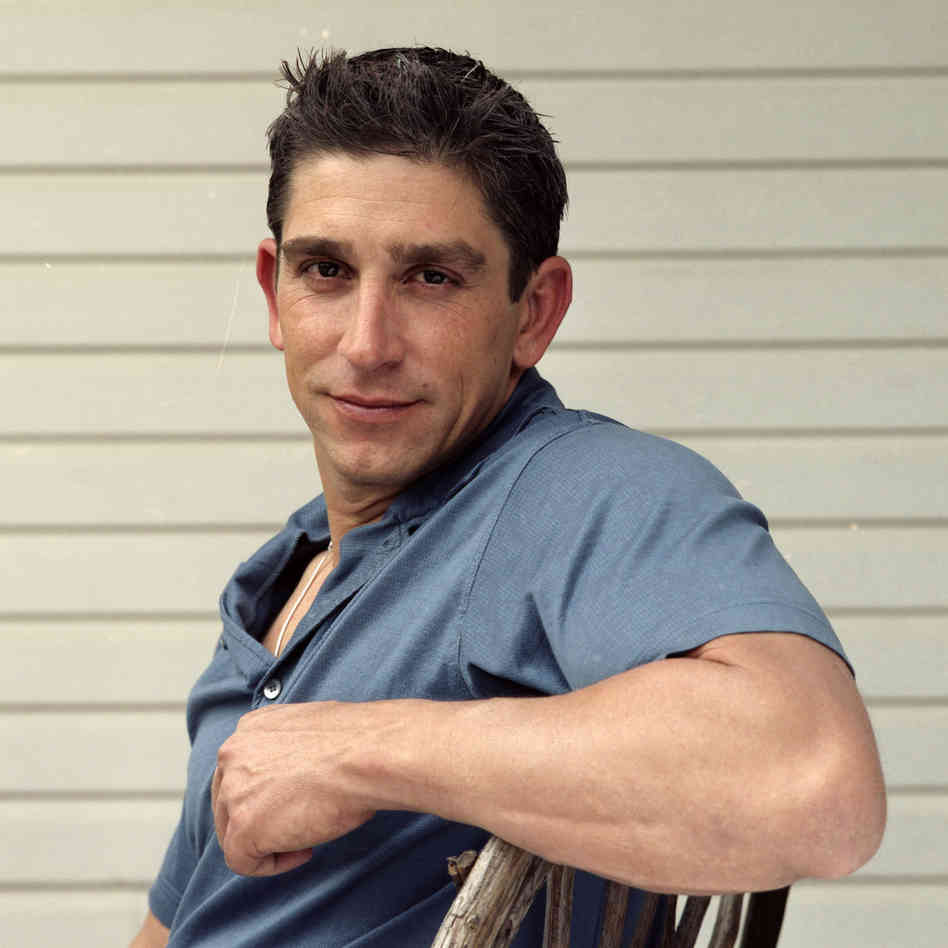
The Inaugural Poet


Richard Blanco, an openly gay Cuban American poet, was President Obama's selection for the inauguration poem.  The choice was extraordinary, as remarkable as Obama's embrace of the gay rights movement into the broader struggle for human freedom and dignity as manifested in feminism, in the struggle for African American civil rights, in the labor movement, and in numerous other such movements by the marginalized to stake their claim upon the promise spelled out in the Declaration of Independence.

Richard Blanco has a life story that a lot of us who are not Cuban can identify with.


I am seven, I think. My grandmother tells me I eat wrong: "Don't use a straw, ever. Los Hombres don't drink soda with a straw. Now throw dat away and sit up." I look wrong: "Dios mío, you nosin but bones. Dat's why the boys at school push you around. Even a girl could beat you up. Now finish your steak, or else." My friends are all wrong: "I no taking you to dat Enrique's house neber again. He's a Mamacita's boy. I don't want you playing with him. I don't care what you say, those GI Joes he has are dolls. Do you want to play with dolls; is dat what you want señorita?"

I play wrong: "I told your mother not to get you those crayons for Christmas. You should be playing outside like un hombre, not coloring in your girly books like dat maricón Juan Alberto." I speak wrong: "Hay Santo, you sound like una niña on the phone. When is your voice going to change?" And I walk wrong too: "Stop clacking your sandals and jiggling like a sissy. Straighten up por Dios--we're in public." I am wrong ("I'll make a man out of you yet . . ."), afraid to do or say anything (". . . you'll see . . ."), scared to want or ask anything (". . . even if it kills me . . ."), ashamed to be alive.

Substitute grandmother for mother and that could almost be my life's story.  I came to the same conclusion about my mother that Richard Blanco did about his grandmother.  They both loved us the best they could and the best that they knew how.

I am so grateful to be alive to see Richard Blanco and all he represents stand in the same place on Inauguration Day as Robert Frost and Maya Angelou.


Monday, January 21, 2013

The Capitol Dome Just Got A Little Bigger and a Little Higher

Just wow:
Our journey is not complete until our gay brothers and sisters are treated like anyone else under the law – for if we are truly created equal, then surely the love we commit to one another must be equal as well. We, the people, declare today that the most evident of truths – that all of us are created equal – is the star that guides us still; just as it guided our forebears through Seneca Falls, and Selma, and Stonewall; just as it guided all those men and women, sung and unsung, who left footprints along this great Mall, to hear a preacher say that we cannot walk alone; to hear a King proclaim that our individual freedom is inextricably bound to the freedom of every soul on Earth.
 ... from President Obama's Second Inaugural Address today.

I never ever thought I would here my kind mentioned by a President of the United States in an inaugural address together with the struggle for women's equality and with the long fight for the Civil Rights of African Americans.  For the first time in my life, I feel like a part, and a historic part, of the United States.

There were a lot of shout-outs to Philadelphia architect Thomas Ustick Walter's US Capitol dome from Senator Chuck Schumer and from Myrlie Evars today.  The cast iron dome which almost did not get built, was finished 150 years ago this year in the midst of the Civil War.


The unfinished US Capitol dome looming over Lincoln's first inauguration, March 4, 1861


As Myrlie Evars said in her invocation, the US Capitol dome represents the unity of the American people and their collective sovereignty.


And it was an ex-slave who cast Thomas Crawford's statue of Freedom in bronze on top of the dome.


"It Ain't Necessarily So."


... from a recent school textbook in Texas.

I can remember when good earnest Bible believing people used to quote the Noah and his sons story to convince very young me that racial segregation was ordained by God.

The Bible says all kinds of things.

Hat tip to Joe.My.God.

"Now Is The Time!"

From Dr. Martin Luther King's sermon to striking sanitation workers in Memphis, March 18, 1968:

You know, Jesus reminded us in a magnificent parable one day that a man went to Hell because he didn't see the poor. And his name was Dives. There was a man by the name of Lazarus who came daily to his gate in need of the basic necessities of life. Dives didn't do anything about it. He ended up going to Hell.
But there is nothing in that parable that says that Dives went to Hell because he was rich. Jesus never made a universal indictment against all wealth. It is true that one day a rich young ruler came before him talking about eternal life. And he advised him to sell all. But in that instance Jesus was prescribing individual surgery, and not setting forth a universal diagnosis.
If you will go on and read that parable in all of its dimensions, and all of its symbolism, you will remember that a conversation took place between Heaven and Hell. And on the other end of that long distance call between heaven and Hell was Abraham in Heaven talking to Dives in Hell. It wasn't a millionaire in Hell talking with a multimillionaire in heaven. Dives didn't go to Hell because he was rich. His wealth was an opportunity to bridge the gulf that separated him from his brother Lazarus.
Dives went to Hell because he passed by Lazarus every day, but he never really saw him. Dives went to Hell because he allowed Lazarus to become invisible. Dives went to Hell because he allowed the means by which he lived to outdistance the ends for which he lived. Dives went to Hell because he maximized the minimum, and minimized the maximum. Dives finally went to Hell because he wanted to be a conscientious objector in the war against poverty.
And I come by here to say that America too is going to Hell, if we don't use her wealth. If America does not use her vast resources of wealth to end poverty, to make it possible for all of God's children to have the basic necessities of life, she too will go to Hell. I will hear America through her historians years and years to come saying, "We built gigantic buildings to kiss the sky. We build gargantuan bridges to span the seas. Through our spaceships we were able to carve highways through the stratosphere. Through our airplanes we were able to dwarf distance and place time in chains. Through our submarines we were able to penetrate oceanic depths."
But it seems that I can hear the God of the universe saying, "even though you've done all of that, I was hungry and you fed me not. I was naked and ye clothed me not. The children of my sons and daughters were in need of economic security, and you didn't provide for them. So you cannot enter the kingdom of greatness." This may well be the indictment on America that says in Memphis to the mayor, to the power structure, "If you do it unto the least of these my brethren, you do it unto me."…
Now you're doing something else here. You are highlighting the economic issues. You are going beyond purely civil rights to questions of human rights. That is distinct…
Now our struggle is for genuine equality, which means economic equality. For we know now, that it isn't enough to integrate lunch counters. What does it profit a man to be able to eat at an integrated lunch counter if he doesn't have enough money to buy a hamburger? What does it profit a man to be able to eat at the swankest integrated restaurant when he doesn't even earn enough money to take his wife out to dine? What does it profit one to have access to the hotels of our cities, and the hotels of our highways, when we don't earn enough money to take our family on a vacation? What does it profit one to be able to attend an integrated school, when he doesn't earn enough money to buy his children school clothes?
So we assemble here tonight. You have assembled for more than thirty days now to say, "We are tired. We are tired of being at the bottom. We are tired of being trampled over by the iron feet of oppression. We are tired of our children having to attend overcrowded, inferior, quality-less schools. We are tired of having to live in dilapidated, substandard housing conditions where we don't have wall to wall carpet, but so often we end up with wall to wall rats and roaches.
"We are tired of smothering in an air-tight cage of poverty in the midst of an affluent society. We are tired of walking up the streets in search for jobs that do not exist. We are tired of working our hands off and laboring every day and not even making a wage adequate with daily basic necessities of life. We are tired of our men being emasculated, so that our wives and our daughters have to go out and work in the white ladies' kitchens, cleaning up, unable to be with our children, to give them the time and the attention that they need. We are tired."
So in Memphis we have begun. We are saying, "Now is the time." Get the word across to everybody in power in this town that now is the time to make real the promises of democracy. Now is the time to make an adequate income a reality for all of God's children, now is the time to make the real promises of democracy. Now is the time to make an adequate income a reality for all of God's children, now is the time for city hall to take a position for that which is just and honest. Now is the time for justice to roll down like water, and righteousness like a mighty stream. Now is the time.